
India’s ecommerce journey is no longer limited to the convenience of buying products online. What began as a discount-driven alternative to physical retail has evolved into something far bigger — a digital lifestyle deeply integrated into how Indians discover, evaluate, and purchase products. Ecommerce today is shaping habits, aspirations, and even local economies.
The next phase of growth will not be about better apps or faster websites alone. It will be about ecosystems — where commerce blends seamlessly with content, creators, payments, logistics, language, and community. Over the next 5–7 years, India is set to witness one of the most transformational ecommerce expansions in the world, driven not just by metros but by the heart of Bharat.
Here are the key trends that will define the future of ecommerce in India and determine which brands lead the next decade.
ONDC Will Redefine the Power Structure of Ecommerce
The Open Network for Digital Commerce (ONDC) is one of the most disruptive developments in India’s digital economy. Traditional ecommerce marketplaces operate as closed ecosystems, forcing sellers to depend heavily on a single platform for visibility, traffic, and sales. ONDC breaks this dependency by creating an open, interoperable network.
Under ONDC, sellers can list their products once and make them discoverable across multiple buyer apps. This fundamentally shifts control back to sellers, especially small and medium businesses, local retailers, manufacturers, and D2C brands. Customer acquisition costs reduce, reach expands, and platform monopolies weaken.
Over the next decade, ONDC will enable a more balanced ecommerce economy where innovation and service quality matter more than ad budgets. Brands that understand ONDC’s structure early and invest in discoverability, logistics integration, and trust signals will gain a lasting competitive edge.
Tier-2 and Tier-3 Cities Will Drive the Next Growth Wave
The future of ecommerce in India does not live in metros alone. It lives in Tier-2 and Tier-3 cities where digital confidence is rising rapidly. Affordable smartphones, low-cost data, and widespread UPI adoption have transformed these regions into active digital consumers.
In the coming years, ecommerce platforms will add more than 300 new cities to their major revenue maps. These consumers are aspirational, value-conscious, and brand-aware — but their expectations are different from metro audiences. They seek relevance, language familiarity, and trust.
English-first interfaces and generic messaging will not convert Bharat consumers effectively. Success in these markets will depend on vernacular content, regional UX, localized offers, and community-based trust-building. Brands that localize deeply rather than superficially will dominate the next phase of ecommerce growth.
Hyper-Personalization Will Become the Default Shopping Experience
Personalization in ecommerce is evolving from simple recommendations to intent prediction. Artificial intelligence will soon allow platforms to understand user needs before they are explicitly expressed.
By analyzing browsing behavior, purchase history, location, language preference, and real-time signals, ecommerce platforms will dynamically personalize product listings, pricing, offers, and communication. AI-powered chatbots will function as intelligent shopping assistants, guiding users through discovery, comparison, and checkout in a conversational manner.
This level of hyper-personalization will dramatically improve conversion rates and customer retention. For brands, the challenge will be to leverage AI intelligently while maintaining transparency and user trust. In the future, generic ecommerce experiences will feel outdated and ineffective.
Voice and Vernacular Search Will Unlock Bharat Commerce
India is a voice-first nation. With over 500 million users preferring Hindi or regional languages, the next ecommerce revolution will be driven by voice and vernacular search.
As AI models improve their understanding of Indian languages, accents, and conversational patterns, voice-based product discovery will become mainstream. This shift will be especially significant in Tier-2, Tier-3, and rural markets, where typing-heavy interfaces act as friction.
Brands will need to rethink their SEO and content strategies entirely. Optimizing for conversational queries, regional language keywords, and voice-led intent will be critical. Ecommerce platforms that master vernacular discovery will onboard millions of new users into digital commerce.
Quick Commerce Will Integrate with Traditional Ecommerce
Quick commerce has reshaped consumer expectations around delivery speed. However, the future is not a battle between quick commerce and traditional ecommerce — it is integration.
High-demand, fast-moving products will be delivered instantly through hyperlocal networks, while long-tail and discovery-driven products will continue through standard fulfillment. This hybrid model will allow platforms to balance speed, assortment, and profitability.
For brands, this means smarter inventory planning and category-based fulfillment strategies. Consumers will no longer differentiate between ecommerce formats — they will simply expect the right delivery speed for the right product.
Green and Conscious Ecommerce Will Shape Brand Loyalty
Sustainability is no longer optional. Indian consumers, especially younger demographics, are becoming increasingly conscious of environmental and ethical impact. Ecommerce brands will be judged not only on price and convenience but also on responsibility.
Eco-friendly packaging, local sourcing, ethical supply chains, and carbon transparency will directly influence brand perception and loyalty. Platforms will begin highlighting sustainability metrics, and brands that fail to adapt risk losing relevance.
In the coming decade, conscious commerce will move from being a branding angle to a core business strategy and a key differentiator in premium positioning.
Social Commerce and the Creator Economy Will Dominate Discovery
Social platforms are no longer just influencing buying decisions — they are becoming the buying journey itself. Instagram, YouTube, and WhatsApp are rapidly evolving into full-fledged commerce ecosystems.
Creators with niche authority and community trust will function as micro-marketplaces. Their recommendations will outperform traditional advertising because they feel authentic and experience-driven. Live commerce, creator storefronts, and community-led product launches will become standard ecommerce strategies.
Brands that treat creators as long-term growth partners rather than short-term promoters will build stronger trust and higher lifetime value.
What This Means for Brands Going Forward
The next decade of ecommerce in India will reward brands that think beyond platforms and focus on ecosystems. Growth will not come from chasing trends blindly but from understanding consumer behavior deeply and building strategies aligned with Bharat’s realities.
Localization, technology integration, trust-building, and long-term value creation will matter more than aggressive discounting. Strategy will matter more than tactics. Adaptability will matter more than scale.
The Future in One Line
The next 100 million ecommerce buyers won’t come from metros — they’ll come from the heart of Bharat.
The future of ecommerce belongs to brands that move early, think strategically, and build for Bharat-first growth. If you’re ready to scale across ONDC, Tier-2 and Tier-3 markets, social commerce, and AI-driven personalization, partner with Brand Chanakya. We don’t chase trends — we build growth systems designed to lead the next decade of Indian ecommerce.
Follow us on Instagram: @brand_chanakya
How to Choose the Right Ecommerce Marketing Mix (SEO, Ads, Influencers & More)
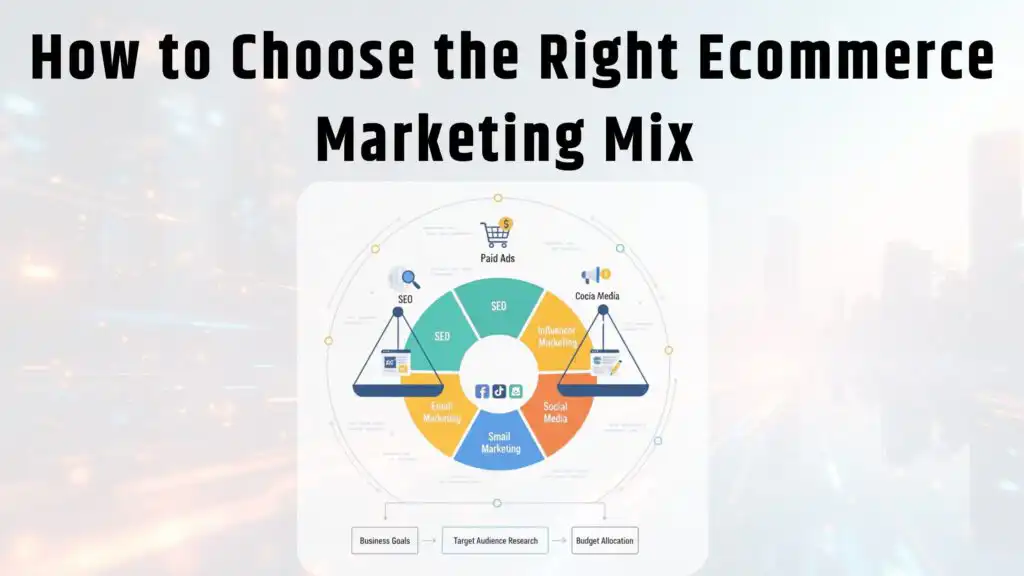
Ecommerce success is not about being present on every marketing channel — it’s about investing in the right channels in the right ratio at the right time. Many online brands spread their budgets across SEO, Meta Ads, Google Ads, Influencers, Email, WhatsApp, marketplaces, and content without a clear allocation logic. The result is scattered performance, rising customer acquisition cost, and unpredictable growth.
A strong ecommerce brand treats marketing like a portfolio, not a gamble. Each channel has a role: some bring new customers, some convert demand, some build trust, and some increase lifetime value. The smartest brands design a marketing mix based on business stage, product type, margin, and buying cycle.
Here is a complete, practical roadmap to help you choose the right ecommerce marketing mix and budget split for sustainable growth.
Why Ecommerce Needs a Marketing Mix Instead of a Single Channel Strategy
No single channel can support ecommerce growth long term. Paid ads can generate traffic quickly but become expensive if not supported by organic visibility. SEO can build consistent demand but takes time to mature. Influencers can create spikes but not stable pipelines. Retention channels can multiply revenue but only after acquisition works.
A marketing mix works because it balances speed, scale, trust, and profitability. Ads give speed. SEO gives stability. Influencers give credibility. Retention gives profitability. Analytics gives control.
When these work together, growth becomes predictable instead of volatile.
Phase-Wise Marketing Mix for Ecommerce Growth
Your channel mix should evolve with your growth stage. Using the same budget split at launch and at scale is inefficient.
Launch Stage (0–3 Months): Build Foundation + Generate Initial Demand
Primary focus should be discoverability and early traction. At this stage, your store needs structure, content, and controlled paid visibility.
Recommended channel focus:
- SEO setup and technical structure
- Product page optimization
- Meta Ads for traffic testing
- Basic content creation
Suggested budget allocation:
- 60% SEO and content foundation
- 40% performance ads
Objectives:
- Get indexed in search
- Create optimized product and category pages
- Test audiences and creatives
- Generate first-party data
SEO work here includes keyword mapping, product descriptions, schema, internal linking, and technical cleanup. Ads are used for testing rather than scaling. The goal is learning, not profit.
Growth Stage (3–9 Months): Scale Conversions + Build Brand Signals
Once you identify winning products and audiences, you increase performance investment and add trust-building channels.
Recommended channel focus:
- Meta and Google performance ads
- Content marketing
- Mid-tier influencer collaborations
- Conversion rate optimization
- Structured retargeting
Suggested budget allocation:
- 60% ads
- 30% SEO and content
- 10% influencers
Objectives:
- Improve conversion rate
- Scale profitable campaigns
- Build brand recall
- Create social proof
Influencer content should be reused in ads and product pages. SEO expands into informational and comparison content. Ads move from testing mode to scaling mode.
Scale Stage (9+ Months): Improve ROI + Maximize Retention
At scale, profitability matters more than raw growth. Retention and brand become major revenue drivers.
Recommended channel focus:
- Retargeting ads
- Email marketing
- WhatsApp automation
- Loyalty and referral programs
- Video branding campaigns
- Marketplace SEO
Suggested budget allocation:
- 40% ads
- 40% retention and CRM
- 20% branding and influencers
Objectives:
- Lower CAC
- Increase repeat purchase rate
- Improve customer lifetime value
- Strengthen brand memory
Retention systems often generate 20–30% of total revenue at this stage. Brands that ignore retention stay trapped in high acquisition spending.
Rule to remember: build SEO early, scale with ads strategically, and protect profit with retention systems.
Understanding the Role of Each Channel
Each channel contributes differently to growth. Budget should be assigned based on role, not trend.
SEO as the Compounding Visibility Engine
SEO builds long-term discoverability and high-intent traffic. It supports both your website and marketplace listings. Strong SEO reduces paid dependency over time and improves product page trust.
SEO benefits include:
- Compounding traffic growth
- Lower long-term acquisition cost
- Better qualified visitors
- Improved product content quality
- Stronger brand authority
SEO should cover technical setup, product optimization, category structure, informational content, and comparison pages.
Performance Ads as the Acceleration Engine
Performance ads provide speed and control. They are ideal for launches, seasonal pushes, and scaling proven offers.
Key advantages:
- Instant traffic
- Fast feedback loops
- Precise targeting
- Budget control
- Creative testing
But ads demand discipline. Without weekly optimization, creative refresh, and funnel tracking, performance drops quickly. Ads should scale winners, not fund experiments forever.
Influencer Marketing as the Trust Layer
Influencer marketing builds credibility faster than brand advertising alone, especially in lifestyle-driven categories like fashion, beauty, wellness, and food.
Benefits include:
- Social proof
- Native content
- Higher engagement
- Faster brand recall
- Strong storytelling
Best practice is diversified creator portfolios instead of single large influencers. Trackable links, codes, and whitelisting improve performance measurement.
Email and WhatsApp as the Profit Multiplier
Retention channels often deliver the highest ROI in ecommerce because they target people who already trust you.
Retention advantages:
- Very low cost per conversion
- High repeat purchase rate
- Strong personalization
- Full ownership of audience
Essential automations include welcome flows, abandoned cart reminders, post-purchase education, replenishment reminders, and VIP campaigns.
Ignoring retention means paying repeatedly to reacquire the same customers.
Analytics as the Control System
Without analytics, channel mix decisions become guesswork. Proper tracking connects marketing spend to revenue outcomes.
Minimum tracking stack should include:
- Conversion tracking
- Channel attribution
- Funnel analysis
- Repeat purchase cohorts
- CAC and LTV tracking
Data doesn’t just report performance — it guides budget shifts.
How to Decide Your Ideal Channel Mix
Before allocating budget to any channel, apply a simple three-question filter.
Does this channel bring new customers
Does it increase repeat purchases
Does it improve brand recall
If a channel satisfies at least two of these, it deserves budget priority. This filter prevents over-investing in vanity channels.
Marketing Mix by Product Type
Different ecommerce categories require different emphasis.
High-repeat products like supplements or skincare should invest earlier in retention and lifecycle marketing.
High-ticket products should invest more in SEO, content, and trust-building before heavy ad scaling.
Trend-driven products should invest more in creators and short-form video with faster ad testing cycles.
Commodity products require sharper performance ads, pricing strategy, and marketplace optimization.
Common Ecommerce Marketing Mix Mistakes
Many brands damage ROI by making predictable mix errors.
Running heavy ads without SEO foundation leads to endless paid dependency. Ignoring post-purchase communication reduces lifetime value. Depending only on influencer spikes creates unstable revenue. Changing channels too quickly prevents learning. Operating without quarterly planning leads to reactive spending.
The correction is structured planning. Marketing should be planned quarterly with channel roles clearly defined.
Building a Quarterly Ecommerce Marketing System
Every quarter should include SEO upgrades, creative testing roadmaps, influencer calendars, offer planning, retention automation expansion, and analytics reviews. Budget shifts should be based on CAC and conversion data, not platform trends.
Consistency beats intensity. Systems beat bursts.
Long-Term ROI Comes from Balance
When your marketing mix is balanced, acquisition cost decreases, repeat purchase increases, brand search grows, and revenue becomes predictable. Profitability improves because each channel supports the others instead of competing for budget.
This stage-based, data-backed mix design is exactly how Brand Chanakya structures ecommerce growth systems — aligning channel ratios with business stage, margins, and customer behavior rather than copying generic formulas.
Final Thought
The future of ecommerce will not belong to brands that shout the loudest — it will belong to brands that understand their customers the deepest. Growth will come from structured channel mixes, retention-driven systems, and data-led decisions.
Strategy — not randomness — is what turns ecommerce stores into ecommerce brands.
Talk to Brand Chanakya — Let’s Build Your Future-Ready Ecommerce Growth Strategy Today.
Follow us on Instagram: @brand_chanakya