
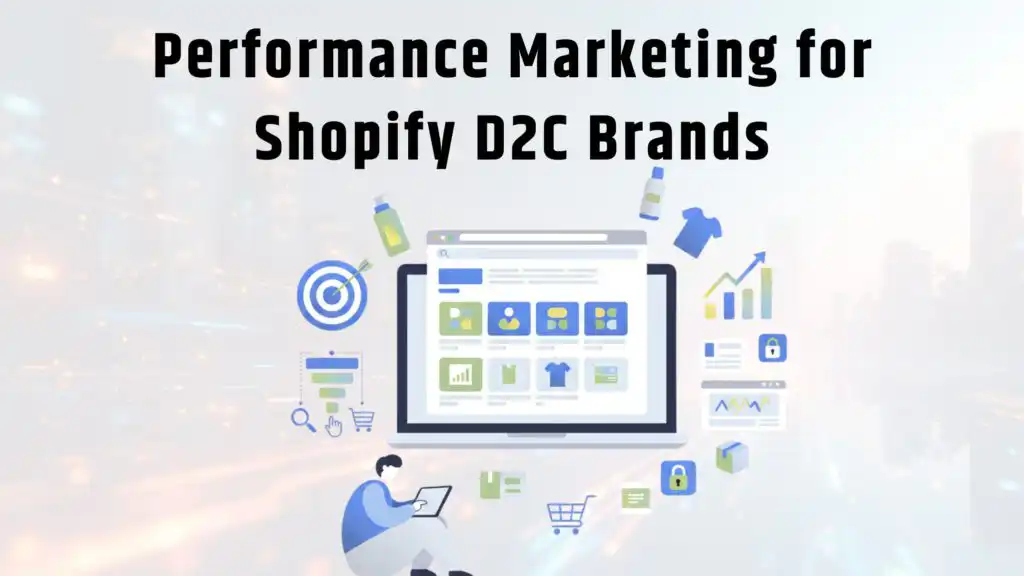
Shopify has made it easier than ever to launch a D2C brand. But launching is not the same as scaling. Thousands of Shopify stores go live every month, yet only a small percentage manage to grow sustainably. The difference is not the platform — it’s how performance marketing is executed on top of Shopify.
Performance marketing for Shopify D2C brands requires a different mindset compared to marketplaces or lead-generation businesses. Every marketing decision directly impacts conversion rates, customer acquisition cost, checkout completion, and repeat purchases. When performance marketing is aligned with Shopify’s ecosystem, it becomes a powerful growth engine. When it isn’t, ad spend leaks through weak funnels and poor store optimization.
Why Shopify Changes the Rules of Performance Marketing
Unlike marketplaces, Shopify gives D2C brands full control over the customer journey. This is both an advantage and a responsibility. While brands own their data, pricing, and experience, they also carry the full burden of conversion optimization.
For Shopify D2C brands, performance marketing success depends on:
- Store speed and mobile experience
- Product page clarity
- Checkout simplicity
- Post-purchase engagement
Ads may bring traffic, but Shopify determines whether that traffic converts.
Performance Marketing for Shopify Is Not Just About Ads
A common misconception is that performance marketing starts and ends with ad platforms. In reality, Shopify performance marketing is a system where ads, store experience, and backend operations work together.
Strong performance marketing for Shopify D2C brands aligns:
- Ad messaging with product pages
- Offer positioning with pricing strategy
- Campaign goals with inventory availability
When these elements are disconnected, scaling becomes expensive and unstable.
The Role of Product Pages in Shopify Performance Marketing
Product pages are the heart of conversion for Shopify stores. No amount of ad optimization can compensate for weak product pages.
High-converting Shopify product pages usually include:
- Clear value proposition above the fold
- Strong product visuals and videos
- Customer reviews and trust badges
- Transparent pricing, shipping, and returns
For performance marketing for Shopify to work, product pages must do the heavy lifting once traffic arrives.
Checkout Optimization: The Silent Revenue Multiplier
Shopify’s checkout is powerful, but small frictions can significantly impact conversions. Performance marketing often fails not because of ads, but because users drop off at checkout.
Common checkout issues include:
- Unexpected shipping costs
- Mandatory account creation
- Limited payment options
- Slow page load times
Optimizing checkout improves conversion rates without increasing ad spend, making it one of the highest-ROI improvements for Shopify D2C brands.
How Performance Marketing Campaigns Should Be Structured for Shopify
Campaign structure should reflect Shopify’s strengths. Instead of sending all traffic to the homepage, high-performing brands:
- Drive traffic to specific product pages
- Create collection-based landing pages
- Align campaigns with best-selling SKUs
This approach improves relevance and conversion rates, making performance marketing for Shopify more efficient.
Attribution Challenges in Shopify Performance Marketing
Attribution is one of the biggest challenges for Shopify D2C brands. Customers often interact with multiple ads before purchasing.
Relying on a single attribution model can:
- Undervalue awareness campaigns
- Overcredit last-click channels
- Lead to poor budget decisions
Successful Shopify brands evaluate performance holistically, combining platform data with Shopify analytics to understand true impact.
Retention and Repeat Purchases in Shopify Growth
Acquisition alone does not scale Shopify brands profitably. Retention is where long-term growth happens.
Performance marketing for Shopify D2C brands must extend beyond first purchase and include:
- Email and SMS remarketing
- Post-purchase upsells
- Loyalty and referral programs
By increasing repeat purchases, Shopify brands can afford higher acquisition costs and scale more aggressively.
Common Mistakes Shopify D2C Brands Make in Performance Marketing
Many Shopify brands struggle due to avoidable errors:
- Sending paid traffic to poorly optimized pages
- Ignoring mobile experience
- Scaling ads without improving store conversion
- Focusing only on new customers
These mistakes increase costs and limit growth potential.
Scaling Performance Marketing for Shopify Brands
Scaling Shopify performance marketing requires balance. Successful brands scale by:
- Improving conversion rates before increasing spend
- Expanding product-level campaigns gradually
- Monitoring profitability, not just revenue
Scaling without store optimization leads to diminishing returns and rising acquisition costs.
Performance Marketing for Shopify at Different Growth Stages
At different stages, Shopify brands should apply different strategies.
Early-stage brands focus on validation and learning.
Growth-stage brands focus on scaling winning products and funnels.
Mature brands focus on efficiency, retention, and margin optimization.
Understanding this evolution helps brands apply the right strategy at the right time.
When Performance Marketing for Shopify Stops Working
Performance issues usually arise from:
- Creative fatigue
- Store friction
- Poor attribution
- Inventory constraints
Fixing these requires auditing the entire system, not just ad accounts.
Long-Term Impact of Strong Shopify Performance Marketing
When done correctly, performance marketing for Shopify D2C brands builds more than revenue. It builds customer data, brand equity, and predictable growth systems.
This is why successful Shopify brands continuously invest in improving both marketing and store experience.
Final Takeaway
Performance marketing for Shopify D2C brands is not just about ads. It’s about creating a seamless system where traffic, conversion, and retention work together.
Brands that focus only on acquisition struggle. Brands that optimize the entire Shopify ecosystem scale sustainably.
If your Shopify store is getting traffic but conversions feel low,
the gap is often between ads and the store experience.
Alignment improves performance naturally.
Book Service with Brand Chanakya
Follow us on Instagram: @brand_chanakya