 Special Offer - Flat 18% off on annual payments!


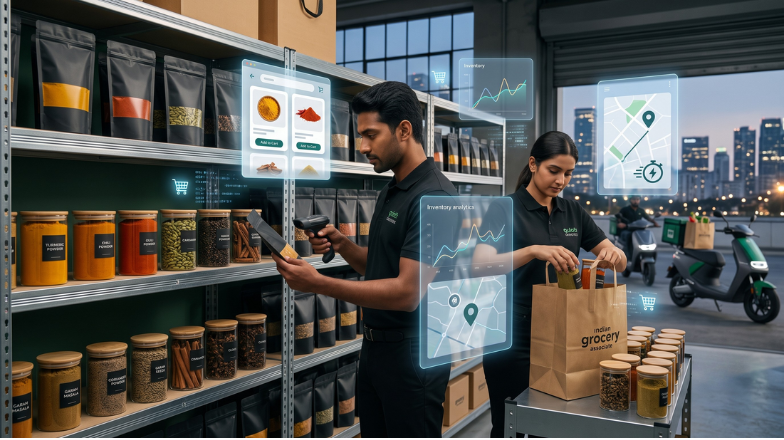
If you want to sell spices on Blinkit, Zepto & Instamart, there’s never been a better time. Quick commerce has transformed how urban India buys groceries. Platforms like Blinkit, Zepto, and Swiggy Instamart deliver spices to customers in 10–15 minutes—faster than a trip to the local kirana store. For spice brands, this channel represents a massive opportunity, with quick commerce spice orders continuing to grow rapidly in 2026.
But getting listed isn’t as simple as uploading products. These platforms have strict onboarding requirements, limited shelf space, and intense competition. This guide walks you through everything you need to know to get your spice brand on India’s top quick commerce platforms.
Why Quick Commerce for Spices?
Before diving into the how, let’s understand the why. Quick commerce offers unique advantages for spice brands:
- ₹2,500 Cr+ — Estimated spice & masala sales on quick commerce
- 80% — Year-over-year growth in spice orders
- 25+ cities — Quick commerce operational reach
- 35% — Customers who discover new spice brands via q-commerce
Key Benefits for Spice Brands
1. Impulse Purchase Opportunity: When someone is cooking and realizes they’re out of garam masala, they order immediately. Quick commerce captures this impulse — something traditional ecommerce can’t match.
2. Premium Pricing Acceptance: Customers pay a convenience premium. A ₹150 spice pouch that might face price resistance on Amazon sells easily when someone needs it in 10 minutes.
3. Repeat Purchase Engine: Spices are consumables. Once a customer tries your brand and likes it, they’ll reorder — and quick commerce makes reordering frictionless.
4. Brand Discovery: Unlike Amazon where customers search for specific products, quick commerce users browse categories. Your brand gets discovered by customers who weren’t specifically looking for you.
Blinkit vs Zepto vs Instamart: Which Platform First?
Each platform has different strengths. Here’s how they compare for spice brands:
| Factor | Blinkit | Zepto | Instamart |
|---|---|---|---|
| Market Share | ~45% | ~30% | ~20% |
| Cities | 25+ | 15+ | 25+ |
| Audience | Mass market | Young, metro | Food-focused |
| Commission | 18-22% | 15-20% | 18-22% |
| Onboarding Speed | 4-6 weeks | 4-8 weeks | 6-8 weeks |
| Best For | Volume, reach | Premium positioning | Recipe-linked spices |
🟡 Blinkit (Zomato)
The market leader with the widest reach. Blinkit should typically be your first quick commerce platform. They have the most dark stores, highest order volumes, and best category management for grocery items including spices.
Best for: Brands wanting maximum reach and volume. Essential spices (turmeric, red chili, coriander) perform exceptionally well.
🟣 Zepto
The fastest-growing platform with a younger, more affluent audience. Zepto customers are more willing to try premium and organic spice brands. Their app design also showcases products better.
Best for: Premium spice brands, organic offerings, and specialty blends. Higher average order values.
🟢 Swiggy Instamart
Swiggy’s grocery arm benefits from their massive food delivery user base. Customers ordering food often add groceries. The platform has strong “recipe ingredient” positioning.
Best for: Spice blends tied to specific dishes (biryani masala, pav bhaji masala). Cross-selling with recipe content.
Eligibility Requirements
Quick commerce platforms have stricter requirements than marketplaces like Amazon. Here’s what you need:
- ✓FSSAI License: State or Central license (14 or 21 digits). Basic registration is NOT accepted.
- ✓GST Registration: Active GST certificate with correct business category.
- ✓Trademark: Registered trademark preferred. Applied TM may be accepted.
- ✓Compliant Packaging: Must include MRP, best before, FSSAI number, batch number, nutritional info, allergen declaration, net weight, manufacturer address.
- ✓Barcode: Valid EAN/UPC barcode on each SKU.
- ✓Shelf Life: Minimum 6 months remaining shelf life at the time of delivery to dark stores.
- ✓Inventory Capacity: Ability to supply 500-1000 units per SKU per dark store.
- ✓Product Liability Insurance: Coverage for food safety claims.
- ✓Existing Online Presence: Live on Amazon/Flipkart shows track record.
- ✓Professional Product Images: White background + lifestyle shots.
- ✓Quality Certifications: ISO, HACCP, or organic certifications add credibility.
Step-by-Step Onboarding Process
The onboarding process is similar across platforms but has some variations. Here’s the typical flow:
Step 1: Application Submission (Week 1)
Start by filling out the seller/vendor application form on each platform’s website:
- Blinkit: partners.blinkit.com
- Zepto: zepto.co/sell-on-zepto
- Instamart: partner.swiggy.com/instamart
You’ll need to provide basic company details, product category, estimated SKU count, and contact information.
Step 2: Document Verification (Week 2-3)
After initial application approval, you’ll be asked to upload all required documents. A category manager will review:
- FSSAI license validity and scope
- GST registration details
- Trademark certificate or application
- Sample packaging images for compliance check
Step 3: Commercial Discussion (Week 3-4)
Once documents are approved, you’ll discuss:
- Commission rates and payment terms
- Pricing and MRP finalization
- Initial SKU selection (start with 5-10 hero products)
- Dark store allocation (which cities, how many stores)
- Promotional commitments (if any)
Step 4: Inventory Dispatch (Week 4-5)
After commercial agreement:
- Receive dark store addresses and inventory requirements
- Dispatch inventory to central warehouse or directly to dark stores
- Ensure proper documentation (invoices, challan, batch details)
- Platform conducts quality check on received inventory
Step 5: Listing Activation (Week 5-6)
Once inventory is received and cleared:
- Product listings go live on the app
- Initial monitoring period (2-4 weeks) to track performance
- Adjustments to pricing, positioning, or inventory based on early data
Don’t try to launch in all cities at once. Start with one metro (Mumbai, Delhi NCR, or Bangalore), prove performance, then expand. This reduces inventory risk and allows you to learn the platform dynamics.
Documentation Checklist
Keep these documents ready before starting the application process:
- ✓Company PAN card
- ✓GST registration certificate
- ✓FSSAI license (State or Central)
- ✓Trademark registration/application
- ✓Certificate of Incorporation / Partnership Deed
- ✓Cancelled cheque or bank statement
- ✓Product catalog with images, descriptions, MRPs
- ✓Packaging artwork (front, back, all sides)
- ✓Nutritional information per SKU
- ✓Shelf life details and storage instructions
- ✓Barcode list (EAN/UPC for each SKU)
- ✓Test reports (if available)
Pricing & Margin Strategy
Quick commerce margins are tighter than D2C but can be managed with the right strategy:
Typical Cost Breakdown
| Cost Component | % of MRP |
|---|---|
| Platform Commission | 18-22% |
| Logistics (if not platform-fulfilled) | 5-8% |
| Packaging | 3-5% |
| Returns/Damages | 2-3% |
| Total Platform Cost | 28-38% |
| Your Realization | 62-72% of MRP |
Pricing Tips for Spice Brands
1. Set MRP with Q-Commerce in Mind: If your target realization is ₹100 and platform costs are 35%, your MRP should be ₹154+. Round up to ₹159 or ₹169 for psychological pricing.
2. Create Q-Commerce Specific SKUs: Smaller pack sizes (50g, 100g) work better than large packs. Customers buy for immediate needs, not bulk storage.
3. Bundle for Higher AOV: Offer combo packs (dal makhani masala + jeera rice masala) to increase average order value and improve unit economics.
Growth Tips for Spice Brands on Quick Commerce
Getting listed is just the beginning. Here’s how to grow once you’re live:
1. Optimize for Search
Quick commerce search is less sophisticated than Amazon. Use clear, keyword-rich titles:
- ❌ “BC Special Blend #7”
- ✅ “Garam Masala Powder | Whole Spices Ground | 100g”
2. Participate in Platform Promotions
Platforms run regular promotional events. Participate in:
- Festive sales (Diwali, Holi)
- Category days (Grocery Tuesday, etc.)
- Combo deals and bundle offers
- Free delivery thresholds
3. Monitor and Replenish Inventory
Stockouts hurt your visibility. Set up inventory alerts and maintain buffer stock. During high seasons (Diwali, wedding season), increase inventory 2-3x.
4. Encourage Reviews
Reviews matter on quick commerce too. Include a thank-you card in packaging asking for reviews. Respond to negative reviews quickly.
5. Build Relationships with Category Managers
Your category manager can help with better positioning, promotional slots, and new store rollouts. Maintain regular communication and share your growth plans. As your brand expands across Blinkit, Zepto, and Instamart, investing in professional ecommerce marketing services can help improve marketplace visibility, optimize advertising campaigns, and drive sustainable sales growth.
Common Mistakes to Avoid
Start with 5-10 hero products. Quick commerce has limited shelf space. It’s better to have 5 products with good inventory than 20 products that keep stocking out.
Platforms reject products for missing declarations. Double-check: MRP, FSSAI number, batch code, best before, net weight, nutritional info, allergens, manufacturer address.
Quick commerce commissions are higher than Amazon. If you use the same MRP, your margins will be squeezed. Create separate SKUs or adjust pricing for quick commerce.
Each dark store needs inventory. If you’re live in 100 dark stores with 500 units/store, that’s 50,000 units of one SKU. Plan production and working capital accordingly.
Need Help with Quick Commerce Onboarding?
Brand Chanakya helps spice brands get listed on Blinkit, Zepto, and Instamart. From documentation to pricing strategy to growth management — we handle it all.
Frequently Asked Questions
What is the minimum order quantity for quick commerce platforms?
The minimum order quantity (MOQ) for selling spices on Blinkit, Zepto, and Swiggy Instamart varies by platform and city, but most quick commerce platforms in India expect brands to supply 500–1,000 units per SKU per dark store during onboarding. New spice brands can often begin with fewer SKUs and gradually increase inventory as demand grows. Maintaining consistent stock availability is essential for improving product visibility and sales on India’s leading quick commerce platforms.
How long does quick commerce onboarding take?
The onboarding process for selling spices on Blinkit, Zepto, and Swiggy Instamart generally takes 4 to 8 weeks, depending on document verification, commercial approvals, and inventory readiness. Indian spice brands with valid FSSAI and GST registrations, compliant packaging, and complete documentation usually experience faster approvals. Preparing all required documents in advance helps reduce delays and speeds up product listing.
What commission do quick commerce platforms charge?
Blinkit, Zepto, and Swiggy Instamart typically charge 15% to 22% commission, although the final percentage depends on your product category, brand size, promotional agreements, and commercial negotiations. Indian spice brands should also account for logistics, promotional costs, and inventory management while calculating margins to maintain healthy profitability on quick commerce platforms.
Can small spice brands sell on Blinkit and Zepto?
Yes. Small Indian spice brands can successfully sell on Blinkit, Zepto, and Swiggy Instamart if they meet the required onboarding criteria, including a valid FSSAI license, GST registration, compliant packaging, barcodes, and reliable inventory. Many regional and emerging spice brands have expanded their reach across India’s major cities by starting with a limited range of best-selling products and scaling gradually based on customer demand.
Which quick commerce platform is best for spices?
There is no single best platform for every spice brand because each quick commerce marketplace serves different business goals. Blinkit is ideal for maximum reach and order volume, Zepto works well for premium and organic spice brands targeting younger consumers, while Swiggy Instamart is particularly effective for recipe-based spice blends and food-focused shoppers. Many successful Indian spice brands begin with one platform, validate demand, and then expand to all three for wider market coverage and sustainable growth.
Brand Chanakya
Digital growth agency specializing in ecommerce and quick commerce for food & FMCG brands. ₹1 Cr+ ad spend managed. Based in Udaipur, serving clients across India.