
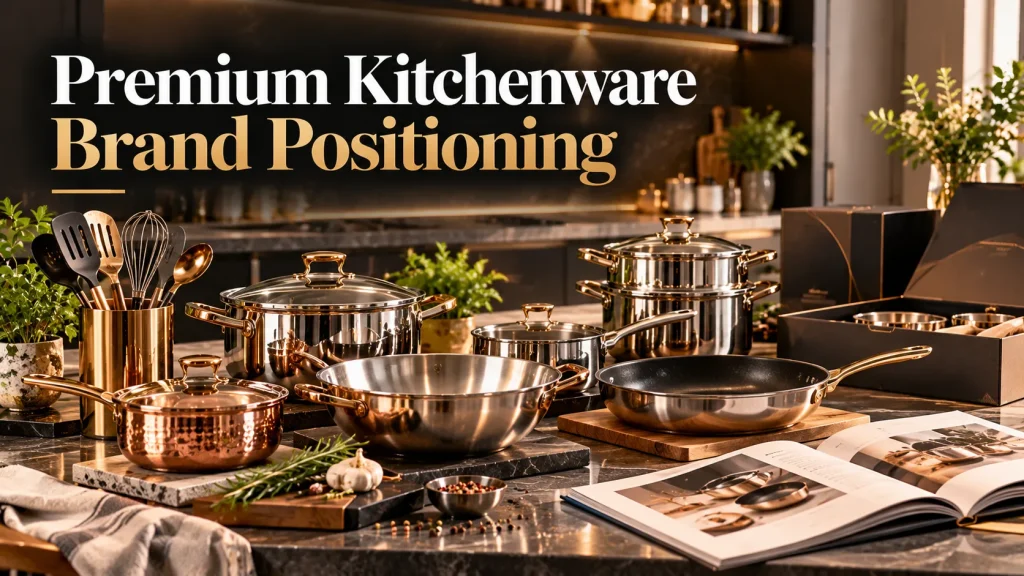
Premium Kitchenware Brand Positioning: Strategies to Build Trust and Value
1. Building a Clear Brand Identity
Premium positioning starts before a single product photo is taken. It means deciding exactly who your brand is for and what it stands for — heavier gauge steel for serious home cooks, heritage craftsmanship for gifting occasions, or modern minimalist design for young urban kitchens. A brand trying to appeal to everyone rarely commands a premium from anyone.
2. Lifestyle Photography That Sells the Experience
Budget brands photograph products on white backgrounds. Premium brands photograph the experience — steam rising from a pan on a lit stove, hands plating food with the product visible, a finished dish styled around the cookware. This single shift in photography does more to signal premium positioning than almost any other change.
Quick Tip
Shoot your hero lifestyle image in warm, natural kitchen light rather than studio lighting. It reads as authentic and aspirational rather than staged, which matters more for trust than technical polish.
3. Premium Packaging as a Trust Signal
For a category with heavy gifting demand — weddings, Diwali, housewarming — packaging is often the very first physical interaction a customer or gift recipient has with your brand. A generic cardboard box undoes weeks of premium positioning the moment the parcel arrives.
- Branded, sturdy outer packaging with your logo and a short brand line
- Tissue or cloth wrapping for gift-tier products
- A small printed card explaining material, care instructions, and warranty
4. Storytelling That Justifies the Price
“Premium” as a word means nothing without a specific story behind it. Explain exactly why your steel is heavier gauge, why your handles are riveted rather than screwed, or why your finish takes an extra manufacturing step. Specificity is what separates real storytelling from marketing fluff.
Did You Know?
Buyers researching premium cookware frequently compare specific details — gauge thickness, induction base layers, handle attachment method — before deciding. Brands that publish these details openly usually convert better than those relying on vague “premium quality” language.
5. A+ Content and Listing Depth
On Amazon and Flipkart, enhanced brand content (A+ content) is where premium positioning either gets reinforced or quietly lost. Use this space for comparison charts against typical alternatives, close-up material shots, and a clear “why choose us” section — not just repeated product images.
| Budget Brand Listing | Premium Brand Listing |
|---|---|
| Plain white-background images only | Lifestyle and close-up detail images |
| Generic bullet points | Specific material, gauge, and certification details |
| No comparison content | Clear comparison chart against common alternatives |
| No warranty mentioned | Warranty terms clearly stated upfront |
6. Trust Signals That Actually Work
Certifications, food-grade material proof, and lab test results all matter, but they only work if they’re visible where the buyer is deciding — not buried in a policy page. Place these in your first three product images and your website homepage.
7. Chef and Expert Endorsements
A regional chef or well-known home cook demonstrating your cookware carries real weight, especially when their audience genuinely overlaps with your target buyer. This works best as a genuine partnership, not a paid mention with no real usage behind it.
Case Study Example
A cast-iron cookware brand we’ve observed in the category struggled against much larger legacy players until they partnered with a regional home-cooking content creator for a series of authentic recipe videos using their pans. The resulting content, repurposed across Instagram and their Amazon A+ content, noticeably improved both trust perception and conversion, without any change to the underlying product.
8. Warranty as a Premium Signal
A generous, clearly stated warranty directly answers the buyer’s biggest hesitation with kitchenware — will this actually last years of daily use. A vague or missing warranty policy quietly signals the opposite, regardless of actual product quality.
9. Customer Experience After the Sale
Premium perception doesn’t end at checkout. A thoughtful post-delivery message, quick response to queries, and genuine resolution of any issue all reinforce (or quietly undo) the premium positioning built through photography and packaging.
10. Mistakes That Undermine Premium Positioning
Common Mistake
Running frequent, steep discounts on a brand positioned as premium. Even occasional deep discounting trains customers to wait for the next sale instead of trusting the value at full price.
- •Inconsistent photography quality across different product listings
- •Vague “premium quality” claims without specific, provable details
- •Generic packaging that doesn’t match the price positioning
- •Slow or defensive responses to customer complaints
11. Consistency Across Every Touchpoint
Premium perception breaks the moment any single touchpoint falls short of the standard set elsewhere. A beautifully photographed listing that arrives in flimsy packaging, or a premium website with a slow, unhelpful customer service response, undoes the work done everywhere else. Treat photography, packaging, content, and service as one connected experience rather than separate line items to tick off.
| Touchpoint | What “Premium” Looks Like Here |
|---|---|
| Listing images | Consistent lighting, styling, and quality across every SKU |
| Unboxing experience | Sturdy packaging, thoughtful presentation, care card included |
| Customer service response | Prompt, personal replies rather than generic templated responses |
| Post-purchase follow-up | A genuine check-in, not just a review request |
12. Pricing With Confidence
One subtle sign of weak premium positioning is a brand that apologizes for its own price — through constant “limited time” framing or comparison pricing that leans on a struck-through higher number. Confident premium brands price plainly and let the product story do the justifying, without needing artificial urgency to support it.
Key Takeaways
- Premium positioning requires provable specifics, not just a higher price tag
- Lifestyle photography and premium packaging are often the fastest wins
- A+ content and listing depth reinforce or undermine the premium story you’re telling
- Chef endorsements and warranty terms are strong, underused trust signals
- Frequent discounting quietly erodes premium perception over time
A Simple Self-Audit Before You Raise Prices
Before repositioning any product as premium, it’s worth honestly checking whether the supporting elements are actually in place. Raising a price without this groundwork rarely works — buyers notice the gap between claim and reality quickly.
| Question | If the Answer Is No |
|---|---|
| Do your first three images show lifestyle context, not just the bare product? | Invest in photography before adjusting price |
| Can you name one specific, provable quality difference from cheaper alternatives? | Identify this before building any premium messaging |
| Does your packaging match the price point you’re asking for? | Upgrade packaging as a priority, it’s often the cheapest fix |
| Is your warranty clearly stated and genuinely competitive? | Clarify and strengthen this before launch |
Conclusion
Premium positioning isn’t about pricing higher and hoping customers follow — it’s about giving them specific, visible reasons to trust that the higher price is justified. Brands that build this consistently across photography, packaging, content, and service earn better margins without ever needing to compete purely on price.
Ready to Move Your Brand Upmarket?
Get a free growth audit with specific recommendations for premium positioning across your listings and D2C site.
Frequently Asked Questions
Can a new kitchenware brand really charge premium prices?
Yes, but only when the premium is backed by visible proof — material quality, certifications, warranty, and consistent presentation.
How important is packaging for premium kitchenware positioning?
Very important, since packaging is often the first physical trust signal a customer experiences, especially for gifting occasions.
Do chef endorsements actually help kitchenware sales?
Yes, when the chef’s audience and reputation genuinely align with your product category, endorsements can meaningfully boost trust.
What’s the difference between premium positioning and just charging more?
Premium positioning is charging more while giving customers clear, provable reasons why, whereas simply charging more without justification reduces conversion.
How long does it take to build a genuinely premium brand perception?
Typically 12-18 months of consistent quality, presentation, and customer experience.
Is a warranty necessary for premium kitchenware positioning?
A clear, generous warranty is one of the strongest trust signals for kitchenware, directly addressing the buyer’s biggest concern.