
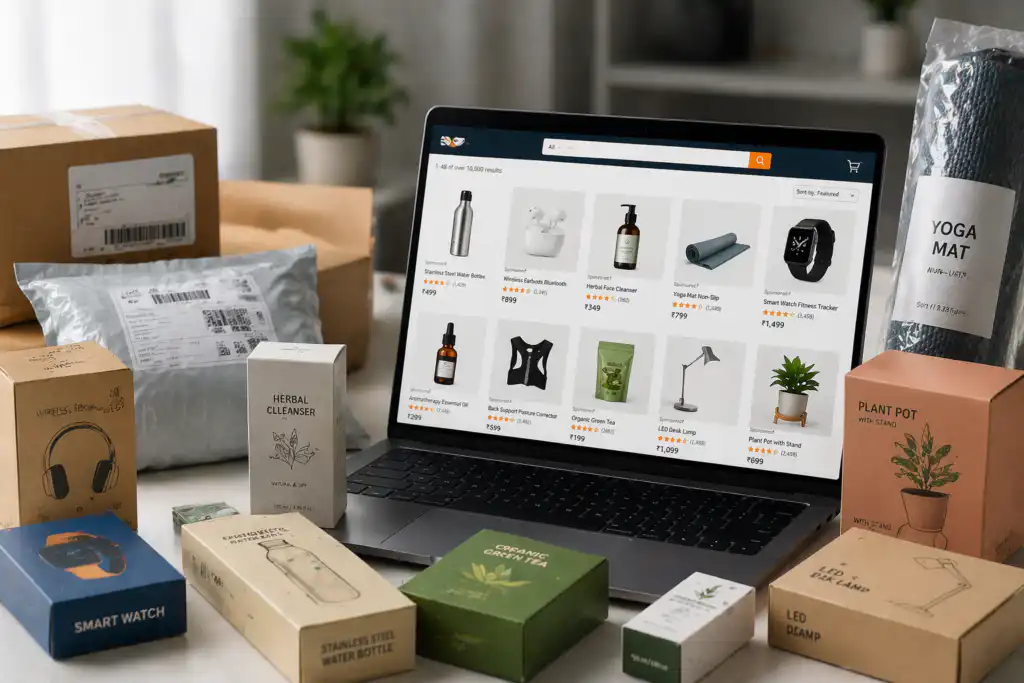
How to Sell on Amazon India: From Registration to Profit
India’s e-commerce market hit ₹10.82 lakh crore in 2024, and Amazon India captures over 31% of that pie. With 270+ million online shoppers and growing, there’s never been a better time to start selling on Amazon.
But here’s the thing: simply listing products isn’t enough anymore. With 17 lakh+ sellers competing for attention, you need to understand the platform inside-out—from fee structures that eat into margins to fulfillment options that determine your conversion rates.
This guide covers everything: the exact registration process, real fee calculations, which fulfillment method works for your products, and the strategies successful sellers use to stand out. Whether you’re a manufacturer, distributor, or just starting your e-commerce journey, this is your complete roadmap to Amazon India in 2026.
Why Sell on Amazon India?
Before diving into the “how,” let’s understand the “why.” Amazon India offers unique advantages that make it the preferred platform for serious sellers:
- Massive Customer Base: Access to 270+ million online shoppers actively looking to buy
- Trust Factor: Amazon’s brand credibility means higher conversion rates compared to unknown websites
- Logistics Network: 35+ fulfillment centers across India with delivery to 19,000+ pin codes
- Prime Advantage: Prime members spend 2-3x more than non-Prime customers
- Zero Investment Start: No registration fees, pay only when you sell
- Marketing Tools: Access to Sponsored Products, Deals, and Lightning Deals
- Global Opportunity: Expand to international markets through Amazon Global Selling
Documents Required for Amazon Seller Registration
Before you start the registration process, gather these documents. Having everything ready will help you complete registration in under 30 minutes:
📋 Essential Documents Checklist
💡 Pro Tip: GST Exemption Categories
Some categories don’t require GST: books, handmade products (if turnover < ₹20 lakh), and certain handicraft items. However, having GST unlocks more categories and looks more professional to customers checking seller details.
Step-by-Step Amazon Seller Registration Process
Here’s exactly how to create your Amazon seller account. The entire process takes 15-30 minutes if you have all documents ready:
⚠️ Account Verification Timeline
Registration takes 15-30 minutes, but verification takes 1-3 business days. Restricted categories may need 3-7 additional days for approval. Plan your inventory and launch date accordingly.
Amazon Seller Fees & Commission Structure
Understanding Amazon’s fee structure is crucial for profitable selling. Here’s how fees work:
Types of Amazon Seller Fees
| Fee Type | Description | Amount |
|---|---|---|
| Referral Fee | Percentage of selling price paid to Amazon for each sale | 2% – 38% (category-wise) |
| Closing Fee | Fixed fee per unit based on item price | ₹5 – ₹85 per unit |
| Weight Handling Fee | Shipping cost for FBA/Easy Ship (varies by weight & distance) | ₹29 – ₹500+ per unit |
| FBA Storage Fee | Monthly fee for inventory stored in Amazon warehouses | ₹35 – ₹50 per cubic ft/month |
| Pick & Pack Fee | FBA handling fee per unit | ₹14 – ₹26 per unit |
Referral Fee by Category
Real Fee Calculation Example
Let’s calculate fees for a ₹999 T-shirt sold via Easy Ship:
📊 Fee Breakdown: ₹999 T-shirt (Easy Ship, Local Delivery)
Selling Price: ₹999
Referral Fee (17%): ₹0 (zero for apparel under ₹1,000!)
Closing Fee: ₹25
Easy Ship Fee (500g, Local): ₹45
Total Fees: ₹70 | Your Earnings: ₹929
Before the 2026 fee reduction, this same product would have had ₹170 referral fee. That’s a 69% reduction in total fees—a game-changer for sellers in the affordable price segment.
FBA vs Easy Ship vs Self-Ship: Which is Right for You?
Your fulfillment choice directly impacts conversion rates, fees, and customer experience. Here’s a detailed comparison:
Our Recommendation: A Hybrid Approach
Most successful sellers don’t use just one fulfillment method. Here’s the smart approach:
- FBA for top 20% products: Your bestsellers with healthy margins and consistent demand. The Prime badge drives significantly higher sales.
- Easy Ship for testing: New products, seasonal items, or lower-margin goods. Validate demand before committing to FBA inventory.
- Self-Ship for special cases: Fragile items, personalized products, or when you have negotiated courier rates that beat Amazon’s.
💡 FBA vs Easy Ship: The Real Math
FBA costs ₹15-25 more per unit—but FBA products typically see 15-20% higher conversion rates. Run the numbers: if FBA increases your monthly sales from 100 to 120 units, the extra fees are more than offset by increased revenue.
Product Listing Optimization Tips
Your product listing is your digital salesperson. Here’s how to make it convert:
Title Best Practices
- Include primary keyword within the first 80 characters
- Add brand name at the beginning
- Include key attributes: size, color, material, quantity
- Keep it under 200 characters for mobile display
- Avoid promotional language (“Best,” “Sale,” “Free”)
Product Images
- Main image: White background, product fills 85%+ of frame
- Include 6-9 images showing different angles
- Add lifestyle images showing product in use
- Include size reference image with measurements
- Resolution: minimum 1000×1000 pixels for zoom
Bullet Points (Key Product Features)
- Lead with benefits, not just features
- Use all 5 bullet points
- Include relevant keywords naturally
- Address common customer questions/concerns
- Keep each bullet under 200 characters
Marketing Your Amazon Products
Organic visibility is competitive. Paid advertising accelerates growth:
Amazon Advertising Options
- Sponsored Products: Keyword-targeted ads appearing in search results. Start here—most accessible and effective for beginners.
- Sponsored Brands: Banner ads featuring your brand logo and multiple products. Requires Brand Registry.
- Sponsored Display: Retarget shoppers who viewed your products or competitor products.
- Amazon DSP: Advanced programmatic advertising (typically for larger budgets).
Getting Started with Sponsored Products
- 1Start with automatic campaigns to discover converting keywords
- 2Set daily budget of ₹300-500 per product initially
- 3Run for 2 weeks, then analyze search term report
- 4Move high-performing keywords to manual campaigns
- 5Target ACOS (Advertising Cost of Sale) of 15-25%
- 6Gradually increase budget on winning campaigns
🎁 New Seller Incentive: ₹26,000 in Ad Credits
Amazon’s New Seller Incentive Program offers up to ₹26,000 in sponsored ad credits for new sellers. Use these credits strategically to boost initial visibility and gather reviews.
Common Mistakes to Avoid
Learn from others’ failures. These mistakes cost sellers lakhs in lost revenue:
1. Ignoring Product Research
Don’t sell what you “feel” is good. Use data—check Amazon Best Sellers, analyze competition, verify demand with tools like Helium 10 or Jungle Scout.
2. Poor Pricing Strategy
Pricing too high loses the Buy Box; too low destroys margins. Calculate ALL costs (product, shipping, fees, returns, ads) before setting prices. Aim for minimum 30% profit margin after all expenses.
3. Neglecting Reviews
Products with 0 reviews rarely sell. Use Amazon’s “Request a Review” button, include insert cards (allowed if following guidelines), and prioritize customer service to prevent negative reviews.
4. Inventory Mismanagement
Stockouts kill your ranking. Over-stocking in FBA incurs storage fees. Maintain 30-45 days of inventory based on sales velocity. Use Amazon’s restock recommendations.
5. Ignoring Account Health
Late shipments, cancellations, and policy violations can get your account suspended. Monitor your Account Health dashboard daily. Keep ODR (Order Defect Rate) under 1%.
6. Not Leveraging Brand Registry
If you have a trademark (even pending), enroll in Brand Registry immediately. You get A+ Content (increases conversion by 8-20%), Brand Store, and protection against hijackers.
✅ Amazon Seller Launch Checklist
✓
GST registration complete
✓
PAN card ready
✓
Bank account for payments
✓
Seller Central account created
✓
Video KYC completed
✓
Product research done
✓
Competitor analysis complete
✓
Product photos ready (6-9 images)
✓
Listing copy written & optimized
✓
Pricing calculated with all fees
✓
Fulfillment method selected
✓
Initial inventory ready
✓
Advertising campaign set up
Frequently Asked Questions
Ready to Start Your Amazon Journey?
Selling on Amazon India is more accessible than ever in 2026. With zero referral fees on products under ₹1,000, expanded logistics network, and powerful advertising tools, the opportunity is massive.
But success requires more than just listing products. You need optimized listings, strategic pricing, smart fulfillment choices, and data-driven advertising. Whether you’re launching your first product or scaling an existing business, the fundamentals covered in this guide will set you on the right path.
Remember: start small, test fast, and scale what works. Your first goal isn’t to sell 10,000 units—it’s to validate your product-market fit and learn the platform. The sellers who succeed are those who treat Amazon as a data-driven business, not a passive income stream.