
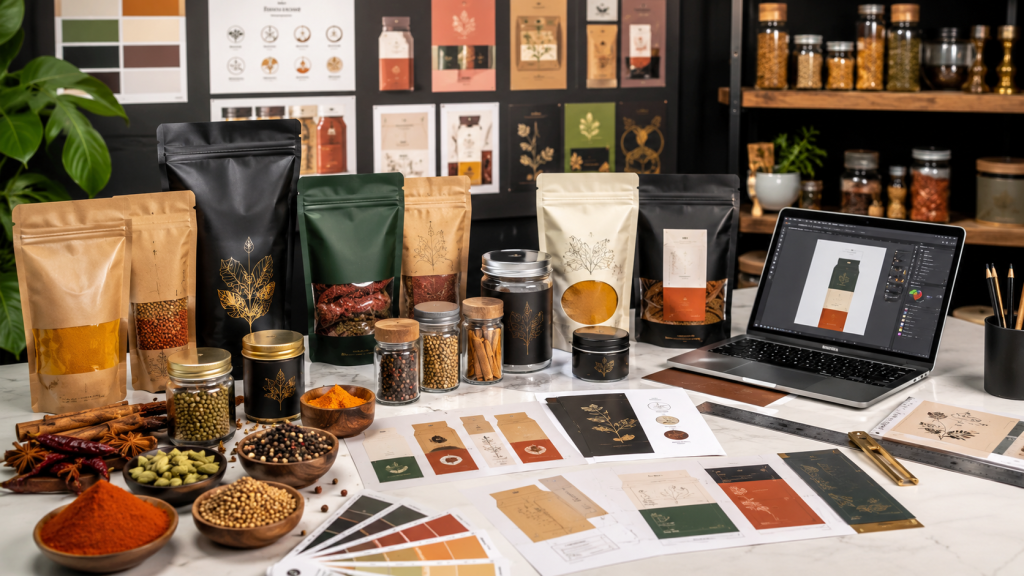
Best spice packaging for Indian ecommerce brands: Use laminated stand-up pouches (PET/AL/PE, 3-layer) with zip-lock closure. They cost ₹3–10/unit, protect against moisture, UV, and aroma loss, and are ideal for Amazon, Blinkit, and Zepto. Ensure FSSAI license number, MRP, batch code, and green veg symbol are on the label — all are mandatory.
Table of Contents
Your spice packaging is more than a container — it’s your brand’s first impression, your quality promise, and often the deciding factor between a sale and a scroll-past. In ecommerce, where customers can’t smell or taste your spices, packaging carries even more weight.
This guide covers everything you need to know about spice packaging: materials, FSSAI compliance, design best practices, platform requirements, vendor selection, and realistic cost breakdowns.
Why Packaging Matters for Spices
Spices have unique packaging challenges that no other food category faces in quite the same combination:
Volatile Oils
Spices lose aroma and flavor when exposed to air. Packaging must be airtight.
Light Sensitivity
UV light degrades color and potency. Opaque or UV-protected packaging is essential.
Moisture Absorption
Spices clump and spoil with moisture. Barrier properties matter greatly.
Shelf Life
Customers expect 12–24 months. Your packaging must be able to deliver this.
Ecommerce Handling
Packages face drops, compression, and temperature swings during transit.
Planning to sell your spices on Amazon, Blinkit, Zepto, or your own website? Our Ecommerce Marketing Services help food and FMCG brands increase visibility, optimize product listings, and drive more online sales.
Packaging Materials: Pros, Cons & Costs
🛍️
Most Popular Choice
Multi-layer laminated pouches with zip-lock closure. Available in various materials and finishes. The go-to format for most D2C spice brands.
Materials: PET/AL/PE (best barrier), PET/VMPET/PE (good barrier, lower cost), PET/PE (basic — not recommended for spices).
Finishes: Matte, glossy, kraft paper look, window (transparent section), metallic.
🫙
Premium Positioning
Premium positioning, reusable, excellent barrier properties. Heavier and more expensive but commands higher prices and conveys quality.
Considerations: Breakage risk in transit (needs better secondary packaging), heavier shipping costs, but excellent shelf presence and reusability appeal.
🥫
Practical Middle Ground
Lighter than glass, lower breakage risk, more affordable. A good balance between pouches and glass for mid-range products.
Considerations: Less premium perception than glass, but practical for ecommerce. Choose food-grade PET with UV protection.
📦
Gift & Specialty
Excellent barrier properties, premium feel, recyclable. Popular for gift boxes and specialty spices like saffron.
FSSAI Compliance Requirements
⚠️
Mandatory Label Declarations
Missing any of these can result in product seizure, penalties, and platform listing removal. Ensure ALL elements are present before printing.
📋 Required Label Information
✓
Common name of the spice (e.g., “Turmeric Powder”)
✓
Your registered trademark/brand
✓
In metric units (g, kg, ml, L)
✓
Maximum Retail Price inclusive of all taxes
✓
MM/YYYY or DD/MM/YYYY format
✓
Months from manufacturing or expiry date
✓
For traceability
✓
14-digit (State) or 21-digit (Central)
✓
Standard logo in prescribed size on principal panel
✓
In descending order of composition
✓
Per 100g — energy, protein, carbs, fat, etc.
✓
“Contains:” or “May contain:” allergens
✓
Complete postal address required
✓
Phone/email for complaints
✓
“Product of India” or similar
✓
Green dot for vegetarian products
Label Size & Placement Rules
- Font size: Minimum 1mm for packages up to 100cm², 2mm for larger packages
- FSSAI logo: Minimum 3mm height, visible on principal display panel
- Veg symbol: Minimum 3mm diameter for packages up to 100cm²
- Contrast: Text must be clearly readable against background
- Language: English or Hindi mandatory; regional languages optional
💡 Pro Tip: Get Pre-Approval Before Bulk Print
Before printing 5,000 pouches, get your artwork reviewed. Many packaging vendors offer compliance checks. You can also consult FSSAI-approved food safety consultants. A ₹2,000–5,000 review can save lakhs in reprinting costs.
Design Principles for Spice Packaging
Good spice packaging design balances shelf appeal, brand identity, and practical information hierarchy.
Key Design Elements
Color Strategy
Use colors that evoke the spice inside. Turmeric = golden/yellow tones. Chili = red/orange. Green for herbs. Dark/black backgrounds for premium positioning.
Premium Finishes
Matte lamination with spot UV on logo. Metallic foil stamping for premium lines. Soft-touch finish for tactile appeal. Adds ₹1–3/unit but justifies higher pricing.
Window Placement
Transparent windows let customers see the actual spice. Builds trust and shows freshness. Position window to show the most photogenic part of the product.
Information Hierarchy
Front: Brand, product name, net weight, window.
Back: Ingredients, nutrition, compliance.
Side: Usage tips, recipes, brand story.
Typography Guidelines
- Brand name: Display font, largest element, instantly recognizable
- Product name: Clear, readable serif or sans-serif
- Legal text: Simple sans-serif, minimum size but readable
- Avoid: More than 3 fonts, decorative fonts for legal text, low contrast
Photography on Packaging
- Show the actual spice (powder/whole) — builds trust and authenticity
- Show the dish it’s used in — creates usage context for the buyer
- Avoid stock photos that look generic and templated
- Ensure colors are print-accurate with proper CMYK conversion
Platform-Specific Requirements
- Barcode (EAN-13) must be scannable and visible
- MRP must match listing price exactly
- FSSAI number on product AND listing
- Package must survive warehouse handling
- Consider Frustration-Free Packaging certification
⚡ Quick Commerce
Blinkit · Zepto · Instamart
- Smaller pack sizes (50g, 100g) preferred
- Must fit in delivery bags
- Quick-grab design for dark store identification
- Consistent barcode placement for fast scanning
- Minimum 6 months shelf life remaining at delivery
- FDA-compliant nutritional panel for USA
- Allergen declarations per target country
- Language requirements (Arabic for GCC, etc.)
- Country of origin prominently displayed
- Different net weight units (oz, lb) may be required
Finding Packaging Vendors
Where to Source
IndiaMART
Largest B2B marketplace. Search “stand up pouch manufacturer” or “spice packaging.” Get 5–10 quotes, verify samples before ordering.
Alibaba
For larger orders or unique requirements. Chinese manufacturers offer competitive pricing but longer lead times and shipping costs.
Local Packaging Clusters
Noida/Delhi NCR
Major flexible packaging hub
Mumbai/Vasai
Glass and PET jar suppliers
Ahmedabad
Competitive pouch manufacturers
Rajkot
Tin container specialists
Vendor Evaluation Checklist
Request samples before bulk order (most charge ₹500–2,000)
Verify food-grade certifications (ISO, FSSAI-compliant materials)
Check printing capabilities (rotogravure for quality, flexo for economy)
Confirm MOQ and pricing at different quantity tiers
Understand lead times for reorders
Ask about design support (do they have in-house designers?)
Check payment terms (avoid 100% advance with new vendors)
Complete Cost Breakdown
Here’s a realistic cost breakdown for spice packaging at different production scales:
| Component | Small (1K pcs) | Medium (5K pcs) | Large (25K pcs) |
|---|---|---|---|
| 100g Stand-Up Pouch (3-layer, matte, zip) |
₹8–10/pc | ₹5–7/pc | ₹3–4/pc |
| 250g Stand-Up Pouch | ₹10–12/pc | ₹7–9/pc | ₹4–6/pc |
| 100ml Glass Jar + Lid | ₹25–35/pc | ₹18–25/pc | ₹12–18/pc |
| Jar Label (printed) | ₹3–5/pc | ₹1.5–3/pc | ₹0.8–1.5/pc |
| Corrugated Shipper Box (12-unit capacity) |
₹25–35/pc | ₹18–25/pc | ₹12–18/pc |
| Design (one-time) | ₹5,000–25,000 per SKU (freelancer to agency) | ||
| Die/Cylinder (one-time) | ₹3,000–8,000 per design (for rotogravure printing) | ||
Example: 100g Turmeric Powder — Total Packaging Cost
| Item | Cost (at 5,000 units) |
|---|---|
| Stand-up pouch (100g, matte, zip, 3-layer) | ₹6.00 |
| Barcode sticker (if not printed on pouch) | ₹0.50 |
| Batch/date coding (ink) | ₹0.20 |
| Secondary packaging (shipper box share) | ₹1.50 |
| Total per unit | ₹8.20 |
✅ For a 100g product with MRP ₹99, packaging represents approximately 8% of MRP — a healthy ratio for FMCG products.
Common Mistakes to Avoid
Ordering Without Samples
Never place a bulk order without physical samples. Colors on screen differ from print. Material quality varies. Get 5–10 samples, fill them with actual spice, store for a week, and check for leaks, odor retention, and print durability.
Ignoring Barrier Properties
Cheap 2-layer pouches save ₹1–2/unit but cost you returns, bad reviews, and brand damage. Spices need an aluminum or VMPET layer for proper barrier protection. Don’t compromise on this.
Overcomplicating Design
Too many colors, fonts, and elements make packaging look cluttered and cheap. Premium brands use restraint. White space is your friend. One hero element — window, product shot, or bold typography — is enough.
Forgetting Secondary Packaging
Your beautiful pouch will be crushed in Amazon’s warehouse without proper shippers. Budget for corrugated boxes, bubble wrap (for glass), and tamper-evident seals.
Not Planning for Scale
If you design for pouches but later want jars, you’ll need completely new artwork. Think ahead. Design a flexible brand system that works consistently across all packaging formats.
✅ Key Takeaways
- Use 3-layer laminated pouches (PET/AL/PE) for maximum barrier protection
- MOQ starts at 1,000 pieces — budget ₹3–12/unit depending on quantity and material
- All 16 FSSAI label elements are mandatory — get artwork reviewed before bulk printing
- Pouches for ecommerce, glass jars for premium retail, PET jars for the middle ground
- At 5,000 units, a 100g spice pack’s total packaging cost is ~₹8.20 (8% of MRP ₹99)
- Always test with samples filled with actual spice for a full week before placing bulk orders
Need Help with Spice Packaging Strategy?
Brand Chanakya can connect you with vetted packaging vendors and provide guidance on compliant, conversion-optimized packaging design.
Frequently Asked Questions
What’s the best packaging material for spices?
+
Laminated stand-up pouches are the best packaging material for most spice brands in India because they provide excellent protection against moisture, oxygen, light, and aroma loss while remaining cost-effective for ecommerce. Multi-layer pouches such as PET/AL/PE are ideal for preserving freshness and extending shelf life. Premium brands may prefer glass jars or tin containers for gifting and high-end positioning, while PET jars offer a practical balance between durability and cost.
What is the MOQ for custom printed pouches?
+
Most custom printed spice packaging manufacturers in India require a minimum order quantity (MOQ) of 1,000 to 5,000 pouches, depending on the material, printing method, and pouch size. Digital printing suppliers may offer lower MOQs for startups, while rotogravure printing becomes more economical for larger production runs. Always compare multiple Indian packaging vendors before placing a bulk order.
How much does packaging design cost?
+
Professional spice packaging design in India typically costs between ₹5,000 and ₹25,000 per SKU, depending on the designer, branding requirements, and packaging complexity. Businesses launching premium FMCG brands or selling on Amazon India often invest in custom packaging that includes compliant FSSAI labeling, barcode placement, attractive branding, and high-conversion design elements that improve shelf appeal and online sales.
Should I use pouches or jars for spices?
+
Stand-up pouches are the best choice for most ecommerce spice brands, while glass or PET jars are better for premium retail products and gift packaging. Pouches are lightweight, affordable, easy to ship, and ideal for Amazon, Flipkart, Blinkit, Zepto, and other ecommerce platforms. Glass jars offer premium presentation but increase shipping costs, whereas PET jars provide a good balance between durability, appearance, and affordability.
What shelf life can I claim for packaged spices?
+
Most properly packaged spices can safely achieve a shelf life of 12 to 24 months when packed in high-barrier, food-grade packaging and stored under recommended conditions. Actual shelf life depends on the spice type, moisture content, packaging material, sealing quality, and storage environment. Before printing labels, businesses should validate shelf life through stability testing and ensure compliance with FSSAI regulations in India.